
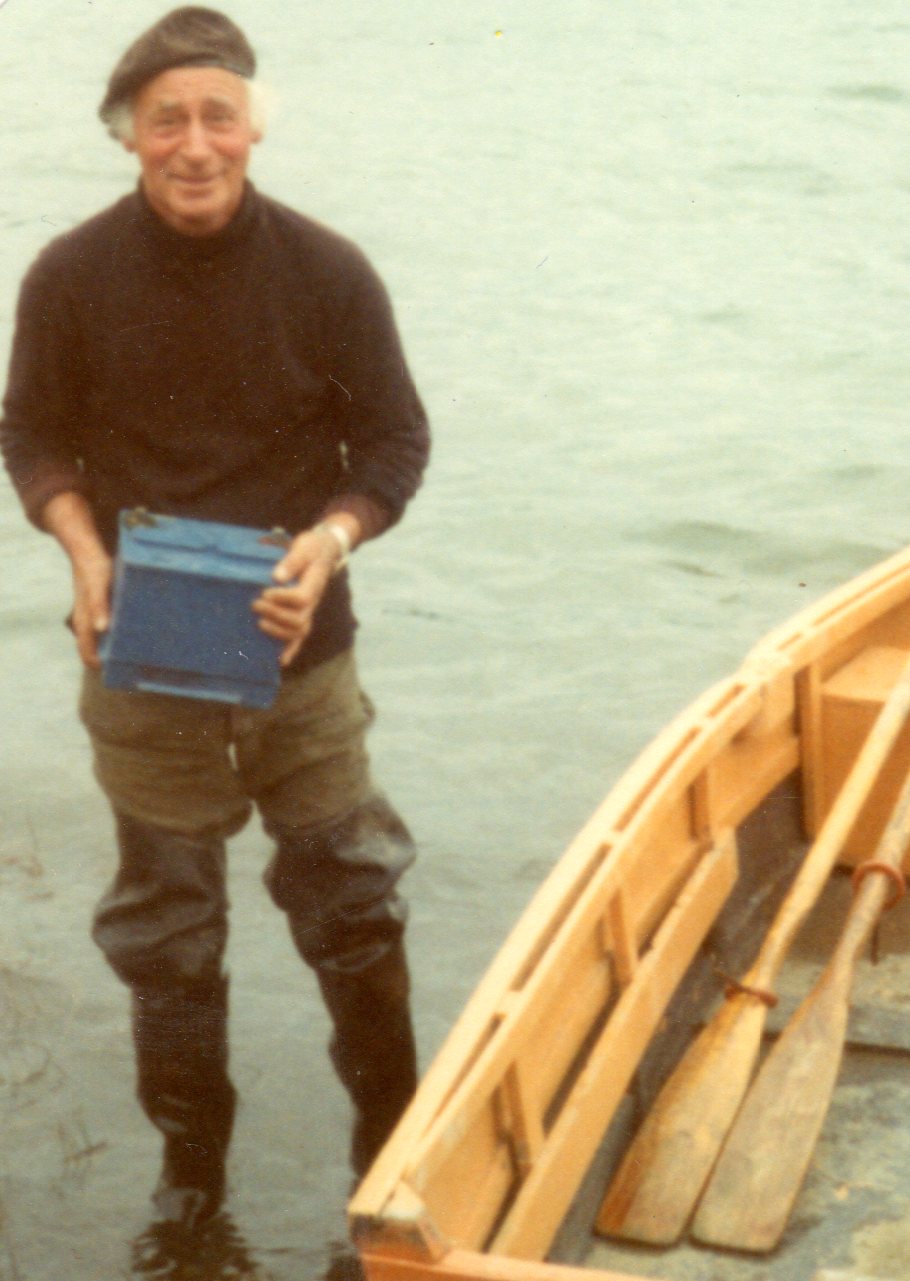
Theo Allis (1925-2008):
Theo didn’t talk a lot about his childhood, or about his time as a teenager and young adult during WWII (as they were painfulmemories), however some of the stories he told his family are below.
NB: In researching this side of our family we were surprised to find out that Theo was the youngest of six children (not three), although the first three died when they were young, before Theo was born. Theo grew up with his siblings Jan and Han.
The following account of Theo’s childhood and his experiences in forced labour and prison camps in Germany during WWII was compiled by his granddaughter, Amelia, primarily from stories he shared with her. Some details may be inaccurate, or may conflict with the information he wrote in his Forced Labour Compensation Application form.
Theo Allis: German Forced Labour Compensation Application (2001) English Translation.
CHILDHOOD:
Theo was born on May 25th, 1925 in Amsterdam, North Holland.
Theo was the youngest child of Johannes Albertus (“Hans”) Allis and Johanna Bouman. Theo said he had a happy childhood. His older brother & sister (Jan and Han) used to call him “de kleine,” little one, because he was the youngest. The three childre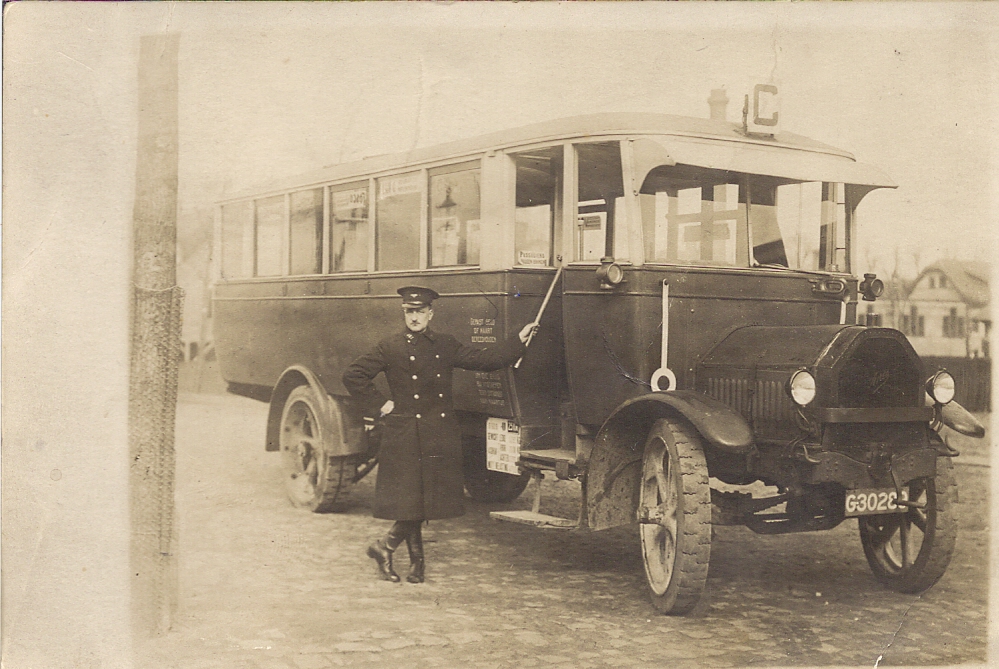
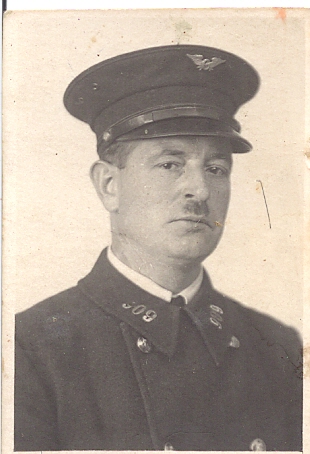
The children’s father loved birds & he kept pigeons. He was a bus-driver and would feed the pigeons on his hands when he was at the station. Their mother was raised on a farm (milking cows, etc).
The children had toilet-trained rabbits, a cat, and a pet duck. The duck went to the toilet on the doorstep (one day the duck was killed & eaten for their dinner – the children were told they were eating chicken & that the duck had “flown away”).
The children took fish from the stream near their house and put them into their pond. The fish could be eaten if they were big enough. Most were light brown, and the size of a hand. Eventually, the pond got overcrowded and the fish died. Once, their father found a dead body floating in the stream.
The children’s father told them that if they saved up their pocket money they could buy a donkey. So the children all saved their money until they had quite a bit – but their father took the money & spent all their savings on a gift for their mother.
Theo frequently brought stray dogs home with him. As soon as his father returned from work each day he would open the shed & release any dogs that his son had brought home. One day, however, the children’s father warmed to one of the dogs & the children were allowed to keep that dog as a pet.
BEGINNING OF WWII:
Jews had to start wearing stars and Russians had to wear blue circles, for identification. Jewish people in their neighborhood began disappearing.
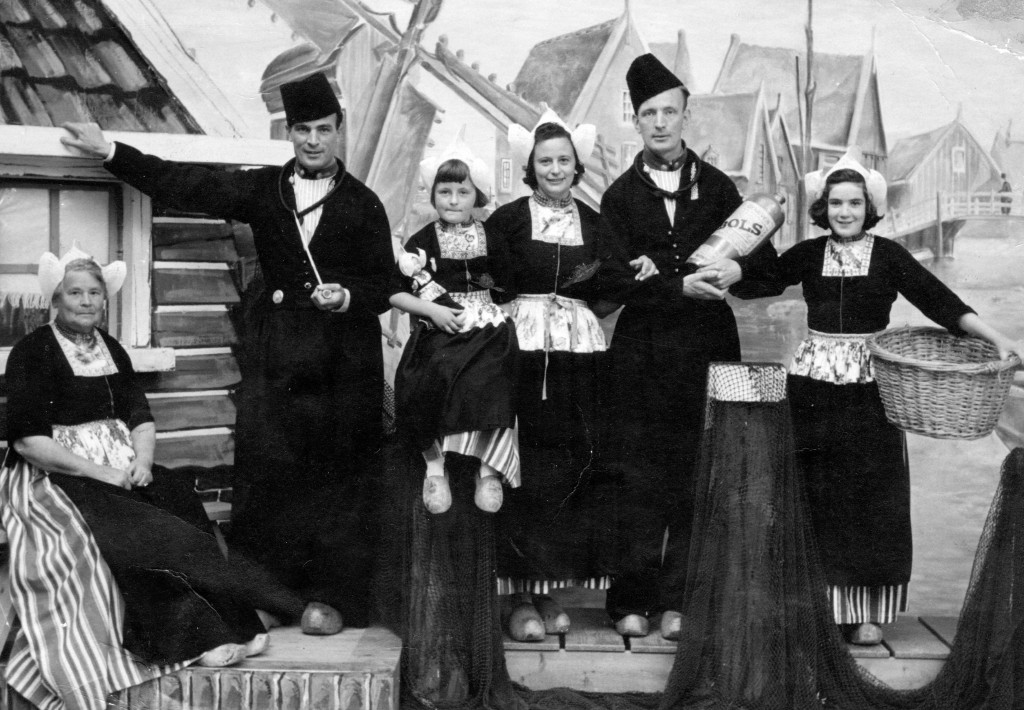
NB: 107,000 Jews in total were deported from the Netherlands between 1942 and 1944 (of them, it is estimated that only 5,000 survived). A further 30,000 Jews remained in the Netherlands, with many peopled aided by the Dutch underground (two-thirds of them survived the war).
As a teenager, Theo worked by the Princess Canal in the Red Light District in Amsterdam – very close to where Ann Frank was hiding (possibly in the same building). He would ice-skate to work along the canal – he was fast and good at it. Ann Frank & her family moved into hiding in July 1942. Theo continued to work there for the next six months (until he was sent to do forced labour in Germany).
Towards the end of WWII there was a big food shortage in the Netherlands. Theo was in Germany during this time (doing forced labour), however his family’s pet cat disappeared during the food shortage (it was probably eaten), and at one stage a friend gave his sister Han some “cooked rabbit” to eat, telling her afterwards that it was actually a cat. She said it tasted good all the same.
FORCED LABOUR IN GERMANY:
- Smith & Schacht, Hedelfingen, Stuttgart — 1943
- Kodak Factory, Ulm — 1944–1945
NB: During WWII, about 500,000 Dutch people were made to do forced labour in Germany (and 30,000 died during this forced labour). Thirty percent of the white-collar workers and laborers in the entire German economy at this time were foreigners who had been brought into the country mostly by force. Conditions were often very tough, and “an unknown number returned with permanent physical and psychological scars.” Theo found this period of his life very difficult, and he rarely talked about it.
In January 1943, at age 17, Theo was sent to do forced labour in Germany (he called this “slave labour”). Altogether, Theo spent about 2 years in forced labour and prison camps in Germany during the war.
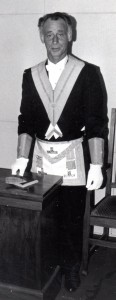
Theo was sent to do forced labour either instead of his father, or because his boss informed on him. He obeyed, taking the train west across the border to Stuttgart / Hedelfingen as directed, because if he didn’t his family would have suffered.
When he arrived at Stuttgart he was going to be sent to one factory but after a lot of arguing got sent to where his brother Jan was in Heidelberg. He arrived there in the Blackout and didn’t know where to go, so he spoke to a man on the street who turned out to be Dutch and worked with Jan, and he took Theo to Jan
The factory was located between Heidelberg and the river Neckar, and it was owned by Smidt & Schout. The owner was Jewish, and was no longer there (he had either been sent to a concentration camp or gone into hiding). It was an armament factory, but Theo didn’t know what the parts were for.
Theo’s job was to watch for fire-bombs dropped by planes onto roofs and go and put them out. He worked 12 hours on, 12 hours off, day and night, 7 days a week with one day off. Jan had a large lathe, Theo a smaller one. On night shifts the boss often mixed them up and sent them to the wrong lathes, they didn’t say anything.
Theo mostly worked night-shifts guarding the factory, and a man from the Ukraine worked day-shifts. The Ukrainian man’s uncle and cousin were considered traitors because they worked for the Germans. They needed the money and the food, so they worked as guards for the Germans to get extra food tokens.
Later on, Theo’s job changed & he painted lampshades (his boss then was very much in favour of the Germans). Theo learned to speak German, and some Russian. He read German books which he had previously read in Dutch so that he could learn the language.
The woman who fed them their meals never cooked enough food. When it was all finished she would joke, “I’ve cooked just enough food again!” Theo would trade his meat tokens for bread, with mothers and families, because bread was more filling than meat and there was more of it.
People told them that the women’s prison camp in southwest Germany had their own private room and the prisoners were allowed to write letters. That was all lies.
ATTEMPTED ESCAPE:
Theo’s brother (Jan), cousin, and one of their friends, successfully managed to escape the forced labour camp and return home. Back in the Netherlands, Jan joined the Underground (and after the war became a Sergeant in the Free Dutch Army).
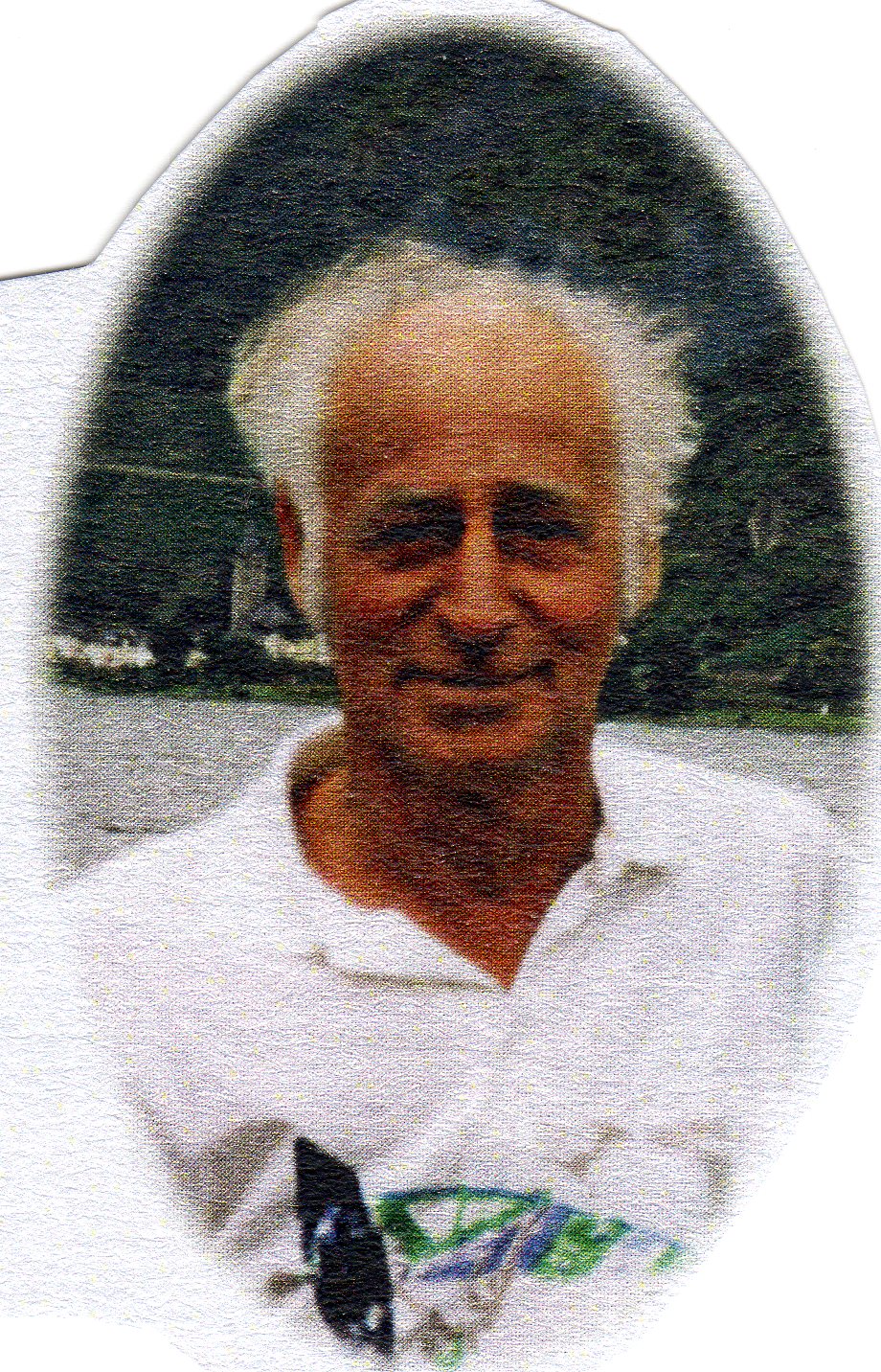
Three weeks later Theo’s father sent him a letter, confirming that his brother had succeeded in escaping. Theo decided to try and escape too. He had been told he only needed a passport to get to neutral Switzerland (below Germany), but of course he found that he needed more. He decided against swimming the river which divided Germany and Switzerland because while many others had attempted it, only a few had succeeded in making it to Switzerland – most had drowned.
Theo took the train to escape back to Amsterdam. He was stopped and discovered twice, but was let off. The third time he was caught when his train arrived at a station, and this time they sent him to a prison camp.
PRISONER OF WAR CAMPS:
- Krefeld POW Camp next to a large factory, Edelstahl Werke
- Anrath POW Camp (an airfield near Krefeld) – painting camouflage on airplanes
- Dachau Camp
- Another camp (unnamed)
- Stuttgart prison – he escaped from Stuttgart prison, was caught and brought before the Gestapo, but a Dutchman (working for the Germans) released him and he went back to doing forced labour for factories after that.
Theo spent the next 1 1/2 to 2 years in prisoner of war camps in Germany (until the end of the war). He knew that if he attempted to escape from any of them he would be shot, so he didn’t try.
Heavy labour, always undernourished. Beaten black and blue with a square iron rod; laid on a bench by two Germans, naked back and buttocks. For days we could not sit or lie down. I urinated a lot of blood; from that time on I have always had many problems with urination and kidneys. And all this happened because we tried to steal bread… The cold was always terrible. Lice and a small thing (pebble) you could not lose, otherwise you would lose everything. (Theo, re. his experience at the Krefeld POW Camp. It was common for prisoners of war to keep a small object, called ‘een klein ding’ – such as a pebble or button – as a personal token of identity or hope).
The prisoners ate mainly swede soup, which Theo hated (after the war he couldn’t stand swede soup!) The prisoners were very hungry most of the time. They took turns excusing themselves to the toilet so that they could scavenge for food in the rubbish bins.
At one of the prison camps, there was a man named Pauki who played the bottles with a hammer (he played in the prison camp concerts). He had been a very talented musician before the war, and could learn any instrument in 5 minutes.
At one stage, Theo was accidentally sent to a concentration camp. At the concentration camp, the prisoners had to climb up netting attached to the sides of planes, and paint camouflage onto them. The netting had wide holes, and was very dangerous. There was no padding on the ground. Prisoners who fell through the netting onto the concrete would break their arms or legs and they were taken off and never seen again, presumably killed. Theo knew that if he stayed at the concentration camp he wouldn’t survive, so after two weeks he worked up enough courage to tell someone that he’d been put in the concentration camp by mistake. As a result, they moved him to another prison camp instead.
Anrath was a women’s prison. The greeting was a fist in your mouth. You lost a tooth; that had to be endured. Hotspot. Junk herring and potatoes. As much as we wanted. Then nothing to drink for 24 hours. That was bad for my kidneys. I lost a tooth again. I was put to work or given a small piece of camouflage netting to hang up. Then potato peels; we got nothing else. After that I was transferred. Other camps. Dachau. I worked there in a prisoners’ camp and was transferred again… Then a bombardment came; locked in an air-raid shelter, handcuffed with two others. The middle one had died. Packed together like herring in a barrel, no air. After some time I ended up in the Stuttgart prison, where after a bombardment (accidentally) I made my escape. I had to be in front of the Gestapo. A Dutchman came (Feist was his name) and I was released the same day. Ragged clothes, no shoes, I had nothing. I weighed 36-40 kg. I had holes in my heels so big I could stick my finger in them and then felt nothing.
After the war, German companies that had used forced labour during the war paid compensation to the forced labourers. The company Theo had worked for, however, had shut down and couldn’t pay Theo any compensation. Read his application form for compensation here: Theo Allis: German Forced Labour Compensation Application (2001) English Translation.
FORCED LABOUR AGAIN:
After he was released from the prison camps by the Dutchman (Feist), Theo worked doing forced labour again in Germany.
From that time on, I worked for Smidt & Schacht in Neuenburg, was bombed out, and then for the Kodak factories in Ulm. One night bombed: 256 bombs on and by the factory. Our air-raid shelter was a tower and the swing was terrible; every time a bomb exploded. I disappeared that night, tried to go to Switzerland. No luck, released by the Americans. Back to Amsterdam in June 1945.
FREE DUTCH ARMY (IN INDONESIA) AFTER WWII:
- Netherlands Army, Utrecht — 1945–1947 — Soldier, Sergeant Instructor
- Netherlands Army, Batavia & Padang — 1947–1950 — Sergeant Instructor
After being freed from the prison camps after the war, Theo returned to the Netherlands only to be conscripted into the Army. He served in the Dutch army in Indonesia for five years (aged 20-25) as a Sergeant. He had lots of free time and he loved to draw in a sketchbook which he kept. He drew pictures of the local Indonesian women in the rice fields, and pictures of the characters from the Disney film “Fantasia” (1940) – a film that he had seen recently & really enjoyed.
IMMIGRATION TO NEW ZEALAND (April 1950):
After Theo was allowed to leave the Dutch Army he was given the choice of whether to return to the Netherlands or to move to a different country. He didn’t want to return to the Netherlands because of the memories of the war, and because the Netherlands was still struggling to recover. He chose New Zealand, thinking it was a tropical country.
Theo arrived in New Zealand with very few belongings. When he arrived he was surprised how cold it was, and he didn’t have enough warm clothes with him. His brother Jan sent some of his things toNew Zealand for him (including his coat). Theo also didn’t have any money because the money he had earned in the army was put into his Dutch bank account – and he couldn’t get it changed to a New Zealand bank account back then. Jan bought some things with that oney, when Theo asked, and posted them to him – including ice-skates (which Theo used to ice-skate in Alexander), and a white rain-coat.
Theo had learned English at school which helped, but it was school English which was different from real English, which made it difficult at first. When he first arrived in Auckland (where he spent two weeks) there were lots of Dutch people who arrived with him. They played cards for money on the train and spoke in Dutch – nobody understood them! It was fine to do in the Netherlands, but strange in New Zealand. When he started work there were no other Dutch people.

FAMILY:
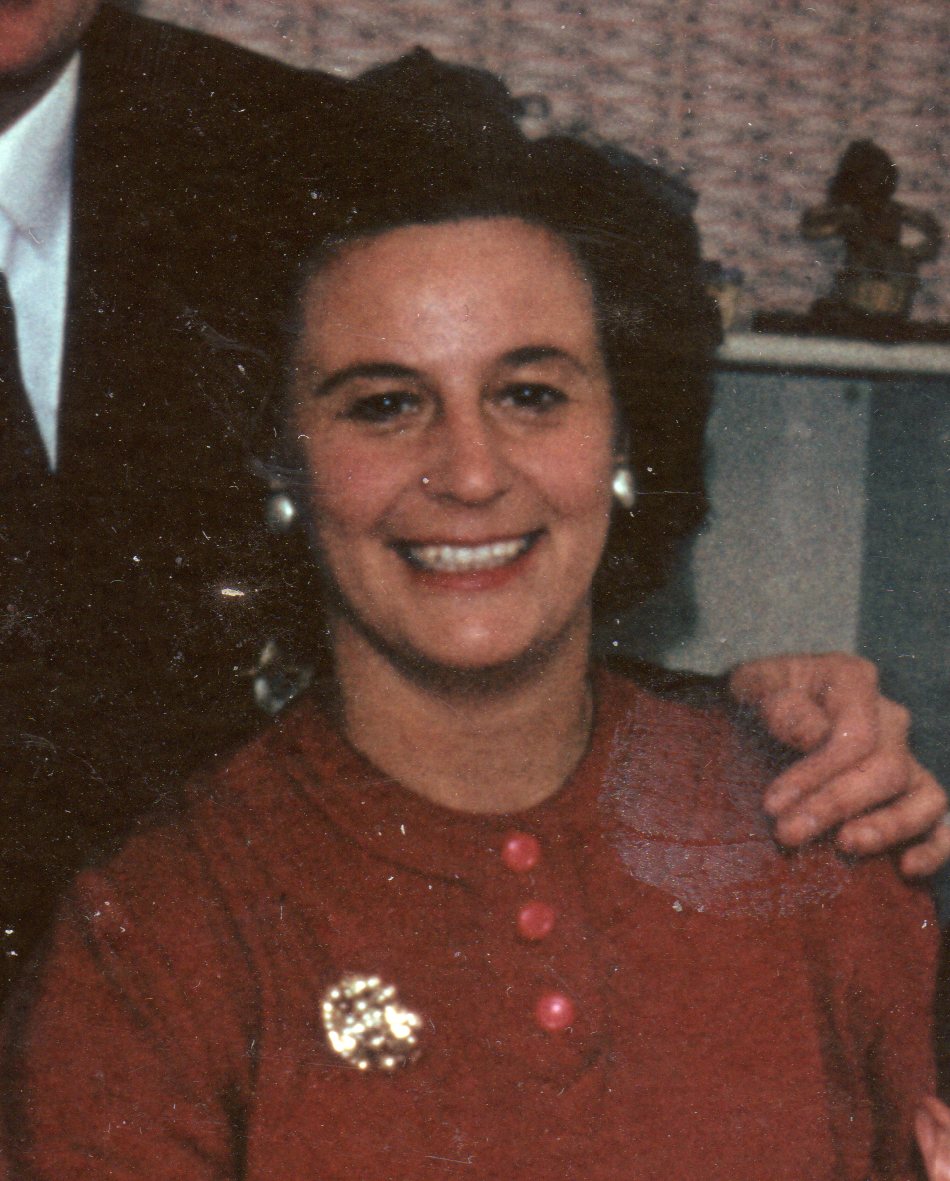
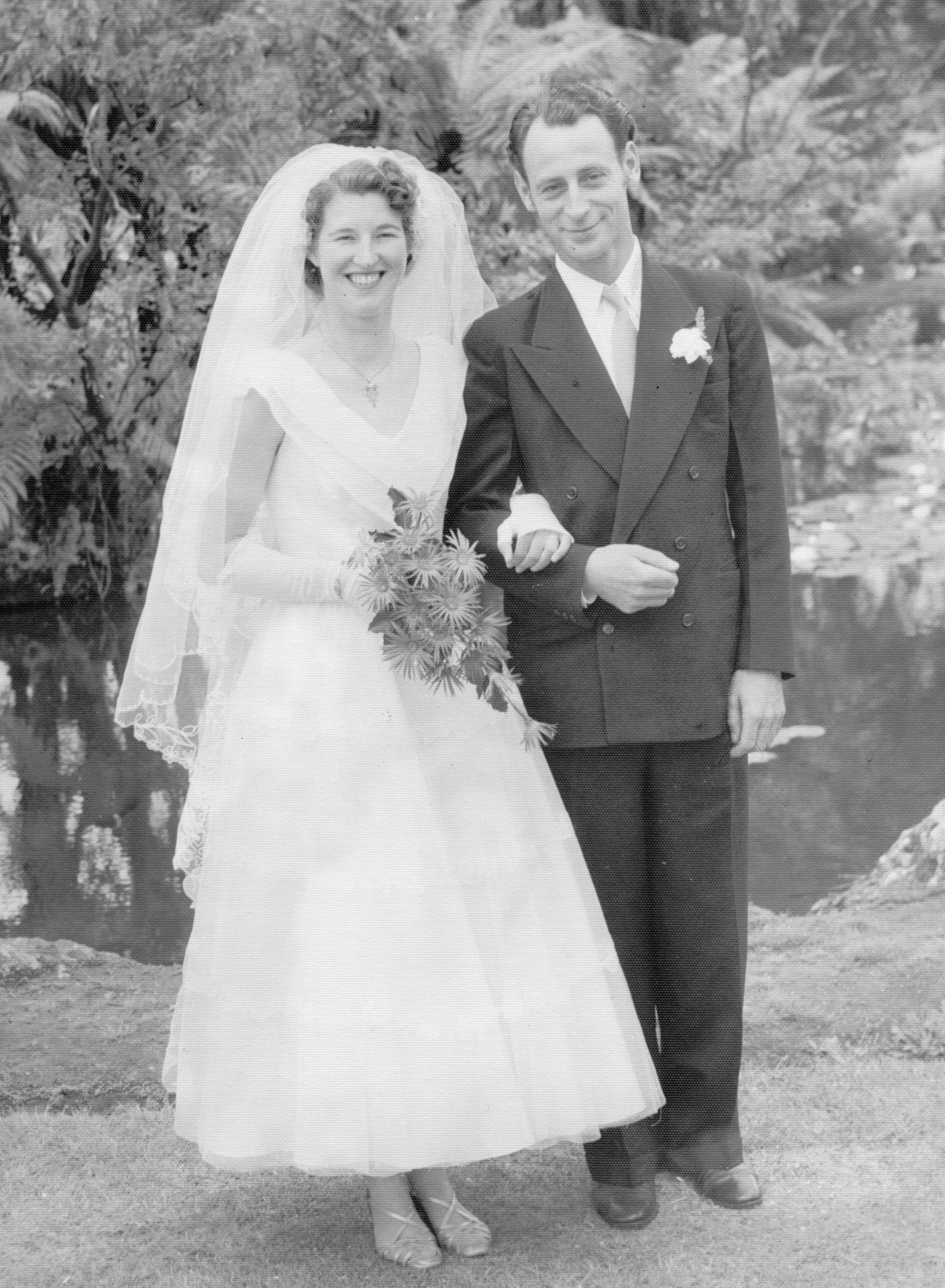
Theo worked as a mechanic in Raglan, New Zealand (he also took his boat out & caught fish to sell to the local fish and chip shop). He married Hilda Scurr (from England) and they had three children (Robin, Gary & David). Theo was advised to not speak Dutch at home because it was thought that learning two languages would be too confusing for his children. He kept in contact with his Dutch family by phone, however he only returned to the Netherlands once (on a trip with his wife).
His children:
Robin Allis moved to Australia and married Catherine, they have 2 children.
Gary Allis married Pam and they have 3 children.
David Allis married Margaret Watson – they live in Auckland and have 6 children. Click here to read the memoirs of Margaret’s father (John Edward Watson).